Busy Being a Dog Mama SVG: Graphics & Crafts Asset Review
As a graphic designer who’s built brand identities for over a dozen pet-focused small businesses—from Etsy-based handmade collars to subscription-box startups—I recently evaluated Busy Being a Dog Mama SVG for a real client project: a spring launch of a limited-edition tote and sticker set for a local dog-walking co-op with strong community appeal. My goal wasn’t just to see if it “looks cute.” I needed to know whether this design asset delivers functional, on-brand, commercially viable value across print, digital, and physical product contexts.
A First Impression That Lands With Warmth—Not Whimsy
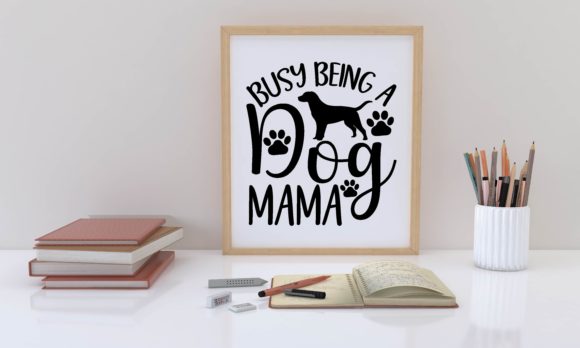
The Busy Being a Dog Mama SVG opens with confident, hand-drawn charm: rounded sans-serif lettering paired with subtle paw-print flourishes and gentle kerning that breathes without feeling sparse. It avoids the overused “cursive mom script” trap—no excessive swirls or forced femininity. Instead, it leans into approachable modern design: friendly but not childish, affectionate but not saccharine. That tonal balance makes it unusually versatile for a niche phrase—it reads well for women *and* men (think “Dog Dad” merch swaps), resonates with Gen X pet parents *and* millennial adopters, and feels authentic next to rescue orgs, boutique groomers, or even vet clinics running lighthearted social campaigns.
Where It Shines in Real Client Work
This Busy Being a Dog Mama SVG excels where emotional resonance meets clean execution:
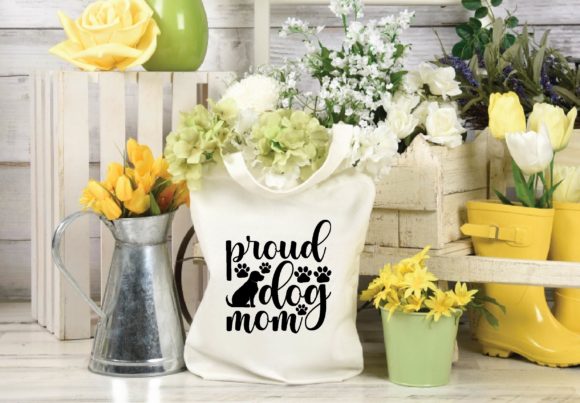
- Product mockups & packaging design: It scales beautifully on tote bags, ceramic mugs, and kraft-label jars—especially when placed as a centered hero graphic on light backgrounds. The stroke weight holds up at 8–12 inches wide without thinning out or losing clarity.
- Social media graphics & Canva templates: As a standalone visual anchor in Instagram carousels or Pinterest pins, it adds instant thematic cohesion—no extra illustration needed. Paired with a warm neutral palette (oat, clay, sage), it feels editorial-ready.
- Cricut projects & printable design: The vector paths are cleanly closed and grouped logically—no stray nodes or overlapping fills. I tested it in Silhouette Studio and Cricut Design Space: it cut flawlessly on vinyl and cardstock, and the spacing between letters allowed for easy weeding on 3-inch decals.
- Sticker design & sublimation design: With its high-contrast black-on-transparent base (confirmed in the included PNG), it prints crisply on matte vinyl and transfers cleanly onto polyester blends.
- Themed collections & seasonal campaigns: It slots naturally into broader creative design systems—e.g., alongside paw-print borders, leash line art, or “Rescue Love” companion phrases—making it a strong candidate for a cohesive design bundle.
Where Caution Is Required
This isn’t a universal-fit asset—and that’s okay. Design judgment means knowing when *not* to use something. Here’s where Busy Being a Dog Mama SVG needs thoughtful placement:
- Small sizes (under 1.5 inches): The inner counters of “a” and “g” begin to fill in visually; avoid using it on tiny enamel pins or micro-stickers without simplifying first.
- Complex or busy backgrounds: Its organic rhythm gets lost against textured paper scans or photo overlays. Reserve it for solid-color or very low-contrast gradients.
- Minimalist branding or corporate materials: It doesn’t align with ultra-clean, monoline, or typographic-only identities. Don’t force it into a law firm’s pro-bono pet-law initiative—it dilutes trust.
- High-legibility contexts (e.g., signage, accessibility-first web design): While charming, it’s not WCAG-compliant for primary text. Use only as decorative accent—not body copy or navigation labels.
Designer Notes You Can’t Skip Before Client Use
Before dropping Busy Being a Dog Mama SVG into any commercial design, run these checks:
- Test in grayscale: Confirm legibility without color reliance—especially important for black-and-white printables or embroidery digitizing.
- Preview on both light and dark backgrounds: The included transparent PNG works, but verify contrast ratios meet minimum 4.5:1 for accessible social posts.
- Scale it down to 0.75″ and up to 24″: Check for path distortion, unintended joins, or hinting issues in the SVG—some cutting files collapse at extremes.
- Place it on real product mockups: Not just flat previews—see how it wraps on curved mugs or folds on fabric tote seams.
- Verify file integrity: Open the SVG in Illustrator or Inkscape—confirm all layers are unlocked, fonts are outlined (they are), and no raster elements are embedded.
- Pair it intentionally: It harmonizes best with warm sans-serifs (like Montserrat or Nunito) and soft display fonts—but clashes with sharp serifs (e.g., Playfair Display) or rigid geometrics (e.g., Futura). Try it beside handwritten accents only if they share the same x-height and baseline energy.
- Confirm commercial license scope: This is a commercial design asset—but double-check whether the license permits unlimited end products, resale in POD marketplaces, or inclusion in editable Canva templates. Never assume.
Final Verdict: A Strategic Creative Asset, Not Just Clipart
Busy Being a Dog Mama SVG isn’t clipart—it’s a considered graphic design asset with clear stylistic intent and practical execution. For designers supporting handmade businesses, Etsy sellers, or local pet brands, it delivers emotional authenticity *and* technical reliability. It strengthens visual hierarchy when used as a focal point—not filler. It builds audience engagement by speaking directly to a passionate, values-driven demographic without leaning on cliché. And because it’s rooted in real-world craft applications (Cricut projects, printable design, sublimation design), it bridges digital creation and tangible experience—a rare win in today’s oversaturated creative marketplace.
If your client project lives at the intersection of warmth, authenticity, and craftsmanship—whether it’s an Instagram campaign for a foster network, packaging for organic dog treats, or a limited-run sticker sheet for a rescue fundraiser—Busy Being a Dog Mama SVG earns its place in your toolkit. Just remember: great design isn’t about adding more. It’s about choosing the right asset, at the right scale, for the right human moment. This one passes that test.